
Discounts vs Incentives: Which Generates Better Leads for Businesses?
Many businesses try to increase customer responses by offering promotions. Two of the most common strategies are discounts and marketing incentives.
While both approaches are designed to motivate customers to take action, they work in very different ways. Understanding the difference can help businesses generate better leads without sacrificing profit margins.
Are Incentives Better Than Discounts for Generating Leads?
Quick Answer:
Incentives often generate higher-quality leads than discounts because they add value instead of lowering prices. While discounts attract price-focused shoppers, incentives motivate prospects to engage without reducing profit margins. Many businesses use promotional rewards such as vacation certificates to encourage customers to request quotes or consultations.
Incentives often generate higher-quality leads than discounts because they add value instead of lowering prices. While discounts attract price-focused shoppers, incentives motivate prospects to engage without reducing profit margins. Many businesses use promotional rewards such as vacation certificates to encourage customers to request quotes or consultations.
How Discounts Work in Marketing
Discounts are one of the oldest marketing strategies. Businesses reduce their price in order to attract attention and encourage customers to make a purchase.Common examples include:
- Percentage discounts
- Limited-time sales
- Coupons
- Promotional pricing
Lower prices reduce profit margins and may attract customers who are mainly focused on finding the cheapest option.
How Marketing Incentives Work
Incentive marketing takes a different approach.Instead of lowering the price, businesses offer a reward that customers receive after taking a specific action.
Examples include requesting a quote, scheduling a consultation, or attending a presentation.
Some companies offer promotional travel rewards such as a 3 Day Vacation Incentive to motivate prospects to engage with their business.
This allows companies to create excitement around their offer without reducing the price of their services.
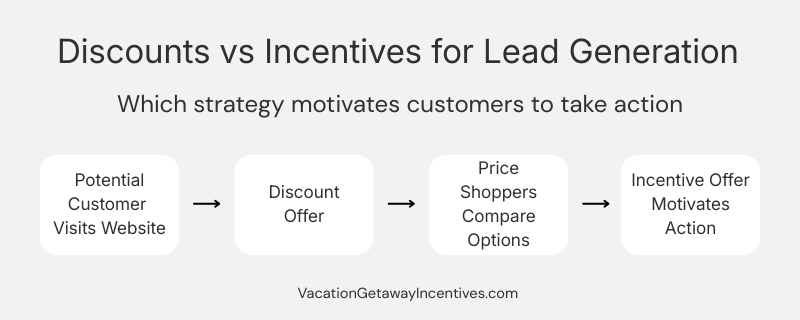
Diagram comparing how discounts attract price shoppers while incentives motivate engagement
Why Discounts Often Attract Low-Quality Leads
When businesses rely heavily on discounts, they often attract customers who are primarily motivated by price.These customers may:
- Compare multiple companies based only on price
- Choose whichever business offers the lowest discount
- Switch providers frequently
Why Incentives Motivate Stronger Engagement
Incentives focus on motivating action rather than lowering prices.Customers receive an additional benefit for responding, which encourages them to engage with the business.
Many companies implement incentive programs like those explained on the How the Incentive Program Works page.
Businesses may also offer higher value rewards such as the 7 Night Resort Getaway or other rewards listed on the Available Incentive Certificates.
When Businesses Should Use Incentives Instead of Discounts
Incentives work particularly well for businesses that rely on consultations, quotes, or service appointments.Examples include:
- Contractors and home service companies
- Insurance agencies
- Real estate agents
- solar companies
- auto dealerships
Using Incentives to Increase Lead Generation
For many businesses, the biggest marketing challenge is converting interest into action.While discounts may generate quick sales, incentives can create stronger engagement and attract more motivated prospects.
By offering a reward for responding, businesses can increase quote requests, generate more leads, and turn website visitors into real opportunities.
Related Articles
- How Incentives Increase Lead Generation for Small Businesses
- Why Discounts Attract Low-Quality Leads
- How to Improve Quote Form Conversion Rates With Incentives